Paquete versus descuento para el día de San Valentín: lo que realmente funcionará en 2026
Los descuentos pueden respaldar una oferta, pero los paquetes lideran al hacer que el regalo parezca completo, reflexivo y fácil de elegir. Comparar paquetes y descuentos le ayuda a decidir cuándo utilizar cada uno, según sus productos, precios y comportamiento del cliente.
Tabla de contenido
- La mentalidad del comprador emocional en 2026
- Cuando fallan los descuentos para el día de San Valentín
- Cómo los paquetes resuelven el problema de los regalos de San Valentín
- Comparación de paquetes y descuentos: una experiencia lado a lado
- Cuándo utilizar descuentos y cuándo confiar en paquetes
- Cómo aprovechar los paquetes de San Valentín para el crecimiento a largo plazo
- Conclusión
- Preguntas frecuentes: paquete versus descuento
Según nuestra experiencia con los comerciantes de Shopify, la combinación versus el descuento muestra que la combinación funciona mejor que los descuentos simples. Los paquetes brindan a los compradores claridad y confianza. Reducen la fatiga por tomar decisiones y hacen que los obsequios se sientan completos. A los clientes también les encanta esta oportunidad de crear su propia caja de regalo. Agregar un pequeño descuento o bonificación puede hacer que el paquete sea aún más atractivo. En la práctica, este enfoque genera mayores conversiones y clientes más satisfechos, especialmente para los compradores de regalos de última hora.
Para muchos comerciantes, puede resultar complicado decidir si utilizar un paquete. Algunos se preguntan si sería más fácil seguir con un simple descuento.
En este blog, te ayudaremos a decidir si los paquetes o descuentos de San Valentín tienen más sentido para tu tienda en 2026.
Resumen
Los compradores de San Valentín compran con emoción y presión de tiempo, razón por la cual los paquetes suelen tener mejores resultados que los descuentos independientes.
Los descuentos pueden respaldar una oferta, pero los paquetes lideran al hacer que el regalo parezca completo, reflexivo y fácil de elegir.
Comparar paquetes y descuentos le ayuda a decidir cuándo utilizar cada uno, según sus productos, precios y comportamiento del cliente.
Este blog explica cómo elegir el enfoque correcto y muestra cómo planificar paquetes de San Valentín que generen conversiones sin perjudicar el valor de la marca.
Antes de comenzar a crear sus propios paquetes, es útil ver cómo funcionan juntos todos los tipos exitosos. Nuestra guía principal para saber todo sobre paquete de San Valentín para Shopify. Puedes usarlo para planificar tus paquetes, comprender qué formatos funcionan mejor y obtener ideas para maximizar las ventas esta temporada.
La mentalidad del comprador emocional en 2026
Cuando venda para el Día de San Valentín, recuerde que sus clientes no buscan ofertas. Están comprando regalos. Sus decisiones están impulsadas por la emoción más que por el precio. La oferta adecuada les da confianza y tranquilidad, especialmente a medida que se acerca la fecha.
Demasiadas opciones o descuentos dispersos pueden ralentizarlos. Los clientes dudan cuando tienen que decidir qué oferta es mejor o qué artículos van juntos. Incluso los productos que ya les gustan pueden pasarse por alto si la experiencia les resulta abrumadora.
Por eso es importante comprender el paquete frente al descuento. Ofrecer un paquete cuidadosamente elaborado puede hacer que sus compradores se sientan guiados y atendidos, mientras que un simple descuento puede no crear el mismo impacto emocional. Cuando diseña sus ofertas en función de cómo se sienten realmente los clientes, tiene más posibilidades de impulsar las conversiones este Día de San Valentín.
Cuando fallan los descuentos para el día de San Valentín
Los descuentos a menudo hacen que los obsequios parezcan genéricos más que especiales. Los compradores pueden notar el precio más bajo, pero rara vez inspira entusiasmo o confianza. Para los compradores de San Valentín, un descuento a veces puede indicar "barato" en lugar de "reflexivo".
Esto es especialmente cierto para los compradores de último momento. No tienen tiempo para comparar ofertas o calcular ahorros. Una oferta con muchos descuentos puede ralentizarlos en lugar de facilitar la compra. Muchos comerciantes ven carritos abandonados cuando dependen únicamente de los descuentos porque los compradores no están conectados emocionalmente con el trato.
Cómo los paquetes resuelven el problema de los regalos de San Valentín
Los paquetes brindan a sus clientes una solución lista para usar que se siente completa. Saben exactamente lo que obtienen, lo que genera confianza y hace que la experiencia de compra sea más fluida. Emocionalmente, los paquetes se sienten intencionados, reflexivos y fáciles de elegir.
Cuando consideras el paquete versus el descuento, los paquetes siempre ganan para los regalos del Día de San Valentín. Cuentan una historia, muestran atención y crean una experiencia significativa. Los descuentos se centran únicamente en el precio y rara vez generan el mismo impacto emocional.
Los paquetes de San Valentín pueden adoptar muchas formas: conjuntos de venta cruzada, opciones de combinación y paquetes de volumen. Por ejemplo, un collar combinado con una tarjeta y una caja de regalo se siente personal y listo para regalar, mucho más atractivo que un solo producto con descuento. Al diseñar ofertas en función de cómo se sienten sus clientes, aumenta la probabilidad de conversiones y compras repetidas.
Comparación de paquetes y descuentos: una experiencia lado a lado
Si piensa en cómo compran sus clientes para el Día de San Valentín, la mayoría de ellos no están en "modo de oferta". Están bajo presión de tiempo. Les preocupa acertar con el regalo. Cuando les muestras un descuento, empiezan a comparar precios y a dudar del valor del regalo. Probablemente hayas visto que esto suceda; El interés aumenta, pero también la vacilación.
Un paquete crea una experiencia muy diferente. En lugar de pedirles a los clientes que decidan qué agregar o si falta algo, les está entregando un regalo listo para regalar. Esa tranquilidad es importante, especialmente en los últimos días antes del Día de San Valentín. Los clientes se mueven más rápido cuando sienten que ya se ha tomado la decisión por ellos.
Los mensajes también cambian de manera importante. Un descuento habla de ahorrar dinero. Un paquete habla de significado. Los compradores suelen reaccionar con pensamientos como "Esto se siente completo" o "Ya no necesito pensar en esto". Esas reacciones son las que empujan a alguien a pasar de navegar a comprar.
Por lo que ven los comerciantes en campañas reales, esta diferencia afecta directamente los resultados. Los paquetes tienden a generar mejores conversiones, reducir las dudas y generar compras repetidas porque los clientes recuerdan lo fácil y segura que fue la experiencia de compra.
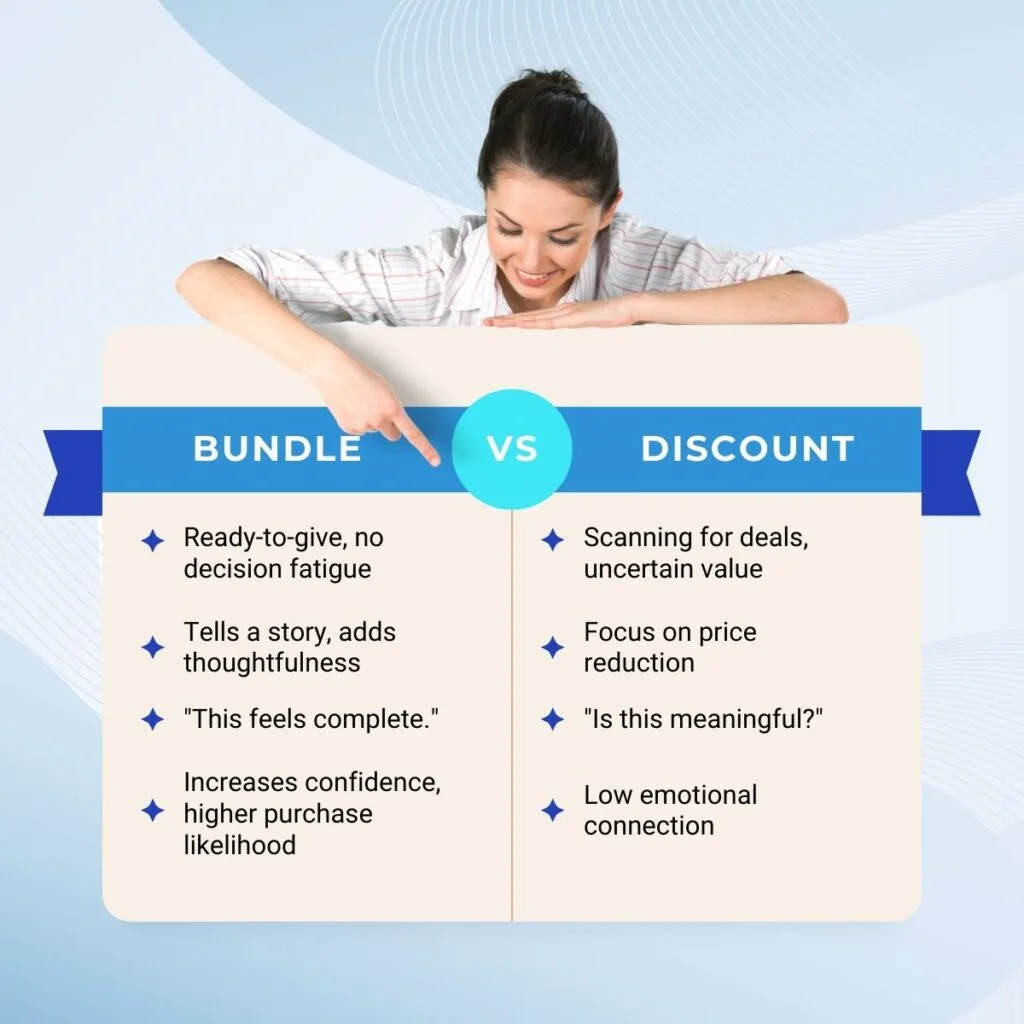
Esto no significa que los descuentos sean malos. Pueden apoyar una oferta. Pero cuando lideras con un paquete, estás ayudando a los clientes a tomar una decisión que ya quieren tomar.
Cuándo utilizar descuentos y cuándo confiar en paquetes
Si estás sopesando el paquete frente al descuento, la verdad es que no siempre tienes que elegir solo uno. Los descuentos aún pueden funcionar, especialmente cuando respaldan un paquete en lugar de reemplazarlo.
Los descuentos pueden tener sentido cuando:
Estás vendiendo productos de bajo precio o de uso repetido.
Quieres agregar un pequeño incentivo a un paquete existente
El envío gratuito o un artículo adicional ayuda a eliminar la vacilación final
Los paquetes deben liderar cuando:
La compra se realiza mediante regalo.
Los clientes pueden sentirse inseguros sobre qué comprar
Quieres que el producto se sienta completo e intencional.
Una buena regla general es empezar con el paquete y utilizar los descuentos a la ligera. Piense en los descuentos como apoyo, no como titulares. Encuadre el valor en torno a lo que está incluido y por qué es un gran regalo, en lugar de cuánto dinero se ahorra.
Algunos comerciantes utilizan Paquete de aplicaciones de Shopify como PushBundle simplemente para estructurar estas ofertas de manera más clara, no para impulsar los descuentos con más fuerza, sino para hacer que los paquetes sean más fáciles de entender y elegir para los clientes. Estas aplicaciones facilitan su tarea al ofrecer una configuración sencilla de combinación, volumen, paquetes de venta cruzada, etc.
Cómo aprovechar los paquetes de San Valentín para el crecimiento a largo plazo
Los paquetes de San Valentín no sólo te ayudan a vender más en febrero. Cuando se hacen bien, generan confianza. Los compradores recuerdan lo fácil y tranquilizadora que les resultó la experiencia de compra, no sólo lo que pagaron.
Esa experiencia continúa. Es más probable que los clientes que compraron un paquete bien pensado regresen para cumpleaños, aniversarios o futuras vacaciones. Puede seguir con conjuntos seleccionados similares o paquetes exclusivos, convirtiendo a un comprador de regalo único en un cliente habitual.
Con el tiempo, este enfoque ayudará a preparar su tienda para el futuro. En lugar de capacitar a los clientes para que esperen descuentos, les está enseñando a esperar valor, atención y conveniencia. Invertir en paquetes construye relaciones más sólidas e ingresos más estables que depender únicamente de los descuentos.
Conclusión
Cuando das un paso atrás y miras el paquete versus el descuento para el Día de San Valentín de 2026, el patrón es claro. Los paquetes funcionan porque coinciden con la forma en que los clientes realmente compran regalos. Reducen la incertidumbre, hacen reflexionar y ayudan a los compradores a avanzar con confianza, mientras que los descuentos por sí solos a menudo hacen que la atención vuelva al precio.
Si el Día de San Valentín es un momento importante para tu tienda, ahora es el momento adecuado para empezar a planificar tus paquetes. Incluso los decorados simples y bien seleccionados pueden marcar una gran diferencia. Para obtener un desglose más profundo de los tipos de paquetes, precios y ejecución, puede volver a visitar nuestra guía principal de paquetes de San Valentín o explorar EmpujarPaquete para crear y presentar paquetes de forma más clara para sus clientes.
Preguntas frecuentes: paquete versus descuento
¿Un paquete significa un descuento?
No. Un paquete agrupa productos para crear una oferta completa. Un descuento baja el precio. Un paquete puede existir sin ningún descuento y aún así sentirse valioso por lo que incluye.
¿Cuál es la diferencia entre un descuento y un paquete?
Un descuento se centra en la reducción de precio. Un paquete se centra en combinar productos de una manera que resulte útil o esté listo para regalar. Uno cambia el precio, el otro cambia la experiencia.
¿En qué se diferencia el paquete de un descuento?
La agrupación ayuda a los clientes a decidir qué comprar presentando una opción completa. Los descuentos piden a los clientes que tomen más decisiones mientras piensan en ahorrar.
¿Son las ofertas de paquetes con descuento una buena idea?
Pueden serlo si se usan con cuidado. Un pequeño incentivo como el envío gratuito o una pequeña reducción de precio puede respaldar un paquete, pero el paquete debe seguir siendo el principal impulsor del valor.
¿Debería empezar con un paquete o un descuento para el Día de San Valentín?
Lidera con el paquete. Si es necesario, agregue un pequeño incentivo para eliminar las dudas, pero evite que el descuento sea el titular.
Revisado para verificar su exactitud
Este artículo fue revisado por el equipo de soporte técnico de PushBundle, que ayuda regularmente a los comerciantes de Shopify a probar la configuración de paquetes, las reglas de selección de productos, los precios de los paquetes, el comportamiento del carrito y los problemas de paquetes relacionados con el pago.
Sobre el autor

Syeda Rehnoma Tanzom
Colaborador de PushBundle
This article is written by Syeda Rehnoma Tanzom, an SEO content writer with 3+ years of experience specializing in eCommerce content. What makes the work here a little different? A close collaboration with support teams to understand what merchants are actually going through, their frustrations, their questions, and their wins. The goal is simple: write content that speaks to real problems, not just search engines. When not buried in keywords and content briefs, you'll find her nose-deep in a good book, binge-watching true crime documentaries or psychological thrillers, and occasionally switching gears with a feel-good rom-com.