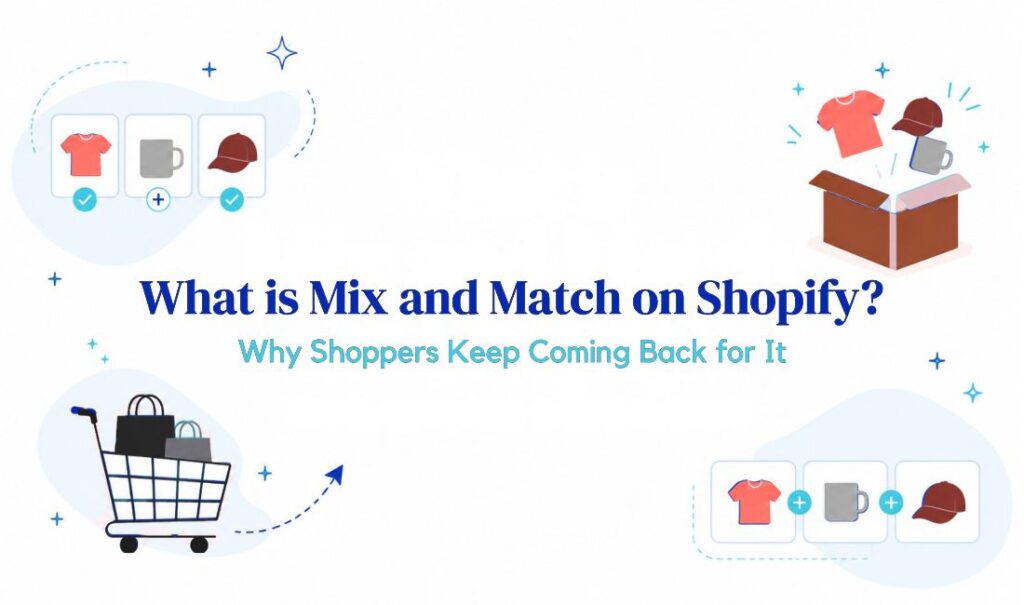
Si vendes productos que suelen venderse en paquetes múltiples y has intentado agruparlos con resultados limitados, el problema podría no ser el paquete en sí, sino la forma en que decides qué productos incluir.
La personalización cambia esto. No es solo una experiencia agradable, es un motor de ingresos. Según McKinsey, Las empresas de rápido crecimiento generan un 40% más de sus ingresos a partir de la personalización que las de crecimiento más lento, y los paquetes combinables son una de las formas más directas de poner eso en práctica en una tienda Shopify.
En Shopify, la opción de combinar productos significa permitir que los clientes elijan diferentes productos o variantes y los combinen en un solo paquete o conjunto.
Tú estableces la estructura: elige 5 artículos cualesquiera, selecciona 3 de esta colección y arma una caja de 11 kg. El comprador la completa. Elige lo que realmente quiere, el precio del paquete o el descuento se aplica al finalizar y realiza el pago. Ese es el concepto.
No es complicado. Pero cambia algo importante sobre cómo los clientes experimentan tu tienda, y vale la pena entenderlo antes de decidir si es lo adecuado para ti.
- La función Mix and Match de Shopify permite a los compradores elegir su propia combinación de productos en lugar de comprar un conjunto preempaquetado.
- Es diferente de un paquete fijo porque el comerciante establece las reglas, pero el comprador crea el paquete en sí.
- Los compradores responden positivamente porque elimina la principal razón por la que las personas omiten los paquetes: un artículo que no desean.
- Funciona mejor en tiendas donde los clientes tienen fuertes preferencias personales dentro de una categoría de producto.
- Shopify no admite esto de forma nativa; necesitas una aplicación para agregar el selector de paquetes y aplicar las reglas de cantidad.
Tabla de contenido
Qué significa realmente “Combinar y mezclar” en Shopify
La función "combina y elige" de Shopify permite a los clientes crear su propio paquete seleccionando diferentes productos o variantes de un grupo preseleccionado. Por ejemplo:
Un comerciante vende café. En lugar de vender un paquete fijo como:
- Café con vainilla
- Café con chocolate
- Café con avellanas
El comerciante puede permitir a los clientes crear su propio paquete:“Elige 3 sabores de café.”.
El cliente puede seleccionar:
- Café con vainilla
- Café con vainilla
- Café con caramelo
Esto se denomina paquete combinado.
Un paquete combinable de Shopify tiene tres componentes.
- Un conjunto de productos: El comerciante define qué productos o variantes son aptos para formar parte del paquete.
- Reglas de cantidad: El comerciante determina cuántos artículos debe seleccionar el comprador, a veces un número fijo, a veces un rango.
- Estructura de precios: un precio fijo por paquete, un porcentaje de descuento o descuentos escalonados que varían según la cantidad de artículos seleccionados.
En la tienda online, el comprador ve una cuadrícula o un selector. Elige sus artículos. Una barra de progreso o un contador muestra el avance de su compra. El botón "Añadir al carrito" permanece bloqueado hasta que se completa el paquete, para que nadie finalice la compra con una selección incompleta.
Una cosa que vale la pena saber: Shopify no ofrece esto de forma nativa.. La plataforma admite paquetes fijos y multipacks, pero no cuenta con una interfaz integrada que permita a los clientes seleccionar su propia combinación de un catálogo de productos en tiempo real. Se necesita una aplicación para añadir esa función de selección, aplicar las reglas de cantidad y el descuento al finalizar la compra.
Paquetes combinados frente a paquetes fijos
Un paquete fijo es exactamente lo que su nombre indica. Tú decides qué incluye, fijas el precio y el cliente lo compra tal cual. Una marca de cuidado de la piel podría vender un limpiador, un tónico y una crema hidratante juntos con un pequeño descuento. Una cafetería podría ofrecer un set de muestras con tres mezclas. El comerciante es quien elige. El cliente decide si quiere esa combinación específica o no.
La función de combinar y mezclar en Shopify funciona de manera diferente. Básicamente es “crea tu propio paquete“El comerciante sigue poniendo las reglas, pero el comprador arma el paquete. Misma marca de cuidado de la piel, diferente configuración: elige 3 productos de la gama de cuidado de la piel. Misma cafetería: elige 4 bolsas de la colección completa.
| Mezclar y combinar | Paquete fijo | |
|---|---|---|
| ¿Quién crea el paquete? | El comprador | El comerciante |
| Selección de productos | El comprador elige de un conjunto definido. | El comerciante preselecciona cada artículo. |
| Complejidad de la configuración | Se requiere una reflexión más previa. | Más sencillo de configurar |
| Control de márgenes | Es más difícil predecirlo con exactitud. | Más fácil de fijar precios y proteger |
| Lo mejor para | Tiendas con variedad y fuertes preferencias personales. | Tiendas con una combinación lógica y universalmente atractiva. |
| Mayor riesgo | El comprador abandona la compra si la selección es demasiado pequeña o si la elección resulta abrumadora. | El comprador omite el paquete debido a un artículo que no desea. |
| Caso de uso para regalos | Fuerte; el comprador selecciona cuidadosamente para el destinatario. | Más débil; el comprador tiene que esperar que el destinatario quiera el conjunto exacto. |
| Soporte nativo de Shopify | No; requiere una aplicación. | Parcial; Shopify Bundles admite conjuntos fijos básicos |
| Disparador de descuento | Se desbloquea cuando el comprador completa su selección. | Aplicable al conjunto prefabricado según se indica. |
Ninguno de los dos formatos es mejor en todas las situaciones. Los paquetes fijos son más fáciles de gestionar, permiten fijar precios con precisión y funcionan bien cuando existe una combinación lógica que la mayoría de los clientes desearían. La opción de combinar productos requiere más tiempo de configuración, pero elimina la principal razón por la que los compradores descartan los paquetes fijos, tema que se aborda en la siguiente sección.
La elección entre ambas opciones depende de tu línea de productos y de tus clientes. Si la mayoría de quienes compran tu paquete ya elegirían la misma combinación, un paquete fijo es una buena opción. Si tus clientes tienen preferencias individuales marcadas y el artículo que no les gusta en un paquete fijo es suficiente para que desistan, vale la pena considerar la opción de combinar diferentes productos.
Por qué a los compradores les encanta
La mayoría de las explicaciones sobre por qué funciona la combinación de productos se limitan a decir que "los clientes se sienten más en control". Si bien es cierto, no es la explicación completa. Hay algunos factores específicos que vale la pena comprender.
El problema del veto. Un solo artículo que un comprador no desea en un paquete fijo suele ser suficiente para arruinar toda la compra. No porque el resto del paquete sea malo, sino porque comprar algo que no necesita le parece un mal negocio, incluso cuando las cuentas le son favorables. La opción de combinar artículos elimina por completo ese obstáculo. Cada artículo del paquete es algo que el comprador eligió.
El efecto de la propiedad. Cuando alguien construye algo por sí mismo, siente que le pertenece más incluso antes de comprarlo. Le dedicó tiempo. Tomó decisiones. Esa inversión psicológica hace que sea más probable que complete la compra que si se tratara de un producto prefabricado.
El marco de recompensa. Con un paquete fijo, el descuento se siente como una venta. Con la opción de combinar y elegir, el descuento se siente como una recompensa por completar algo. Según Investigación de Kivetz, R., Urminsky, O. y Zheng, Y., Los clientes inscritos en programas de fidelización aumentan la frecuencia de sus compras a medida que se acercan a los umbrales de recompensas. El mensaje "Compraste un paquete de 5, aquí tienes 20% de descuento" tiene un impacto diferente al de "este paquete tiene 20% de descuento". El comprador siente que se lo ha ganado, en lugar de haberlo obtenido por casualidad.
Regalos. Esta opción está infravalorada. Al comprar un regalo, un paquete fijo obliga a adivinar si el destinatario querrá todos esos artículos específicos. La opción de combinar y personalizar permite crear un conjunto que se ajuste a los gustos de la persona a la que se le compra. Esto ofrece una experiencia mucho mejor, y por eso la opción de combinar y personalizar funciona tan bien en el mundo de los regalos.
Sectores donde los paquetes combinables funcionan mejor
La opción de combinar productos en Shopify no es adecuada para todas las tiendas. Funciona bien en situaciones específicas. Suele tener mejor rendimiento cuando los clientes tienen preferencias personales marcadas dentro de una categoría.
Color y fragancia Son el ejemplo más claro: lo que a una persona le encanta, a otra le resulta insoportable. Permitir que los compradores elijan su propia combinación no es solo una ventaja, sino la única forma en que un paquete tenga sentido.
Comida y refrigerios, Por ejemplo productos de panadería, funcionan de manera similar, especialmente cuando las preferencias dietéticas o de sabor varían mucho entre su base de clientes. Accesorios de ropa, artículos de papelería y productos de belleza. Sigue la misma lógica.
Tiendas de regalos son otra opción que encaja perfectamente. También lo son las tiendas donde el producto se vende a granel, pero el cliente siempre busca una mezcla específica; por ejemplo, polvos de color para eventos, artículos para manualidades o tés especiales.
Dónde funciona peor: Tiendas con un catálogo de productos reducido que no ofrece opciones significativas a los compradores, productos con una combinación obvia que casi todos elegirían, o categorías donde el valor reside en la selección experta más que en la elección personal. Una cesta de regalo cuidadosamente seleccionada, cuyo atractivo reside en que "la tienda la eligió", es un ejemplo donde un paquete fijo podría generar mejores resultados.
Un ejemplo real: los colores camaleónicos
Colores de camaleón Vende polvos de colores en 10 tonos para eventos: carreras de colores, fiestas de revelación de género, eventos benéficos escolares, festivales Holi. Sus clientes casi siempre quieren más de un color. Pero la página de producto predeterminada de Shopify solo les permite seleccionar uno a la vez.
No se trataba de una simple molestia. Era un desajuste estructural entre cómo los clientes querían comprar y cómo estaba organizada la tienda para vender.
Crearon dos combinaciones en Shopify usando Paquete PushBundleDos opciones: un paquete de 2,2 kg y un paquete a granel de 11,3 kg, cada uno con cantidades flexibles. El botón "Añadir al carrito" permanece bloqueado hasta que se complete el paquete, evitando así pedidos parciales. Los clientes eligen sus colores, especifican la cantidad y finalizan la compra en un proceso sencillo.
El resultado fue de $21.946,30 en ventas de paquetes en 29 pedidos, con un valor promedio por pedido de $756,77. Esto no es un resultado de marketing; es lo que sucede cuando la experiencia de compra coincide con la forma en que los clientes realmente quieren comprar.
¿La opción Mix and Match es adecuada para tu tienda?
Algunas preguntas sinceras que vale la pena hacerse antes de configurar nada.
¿Sus clientes suelen querer más de un artículo? Si un cliente suele comprar un solo producto y luego pasa a otro, venderle un paquete combinado es más difícil. La estrategia de combinar productos funciona mejor cuando las compras de varios artículos ya forman parte de la percepción que tus clientes tienen de tus productos.
¿Su línea de productos ofrece suficiente variedad como para que la elección sea significativa? Si tienes tres productos y son bastante similares, no hay mucho que combinar. Necesitas suficientes opciones para que los distintos clientes realmente elijan productos diferentes.
¿Ya estás perdiendo ventas de paquetes debido al problema del conjunto fijo? Si has probado paquetes fijos y la tasa de conversión es baja, conviene comprobar si los comentarios de los clientes indican que el problema reside en los artículos preseleccionados. Esa es la señal más clara de que la opción de combinar artículos tendría un mejor rendimiento.
Si vendes en una categoría donde la preferencia personal influye en la compra, y tus clientes ya tienden a comprar varios artículos, probablemente valga la pena probar la opción de combinar diferentes productos.
Cómo configurar un paquete de Shopify combinable
La configuración real es más sencilla de lo que parece. Este es el proceso general, independientemente de la aplicación que utilices.
Paso#1 Defina su cartera de productos.
Decide qué productos o variantes se pueden incluir en el paquete. Puede ser todo tu catálogo, una colección específica o una selección cuidadosamente elegida. Cuanto más reducida y selecta sea la selección, más fácil será la decisión para el cliente.
Paso#2 Establece tus reglas de cantidad.
Decide cuántos artículos debe seleccionar un comprador para completar el paquete. Puede ser un número fijo (exactamente 5), un mínimo (al menos 3) o una estructura escalonada (3 artículos, 5 artículos o 10 artículos a diferentes precios).
Paso#3 Elige tu estructura de precios.
Las opciones suelen incluir un precio fijo para el paquete, un descuento porcentual sobre el total combinado o descuentos escalonados que aumentan a medida que el cliente añade más artículos. Los precios escalonados tienden a incentivar una mayor variedad de productos sin que el comerciante tenga que establecer una cantidad mínima.
Paso#4 Elige la aplicación adecuada.
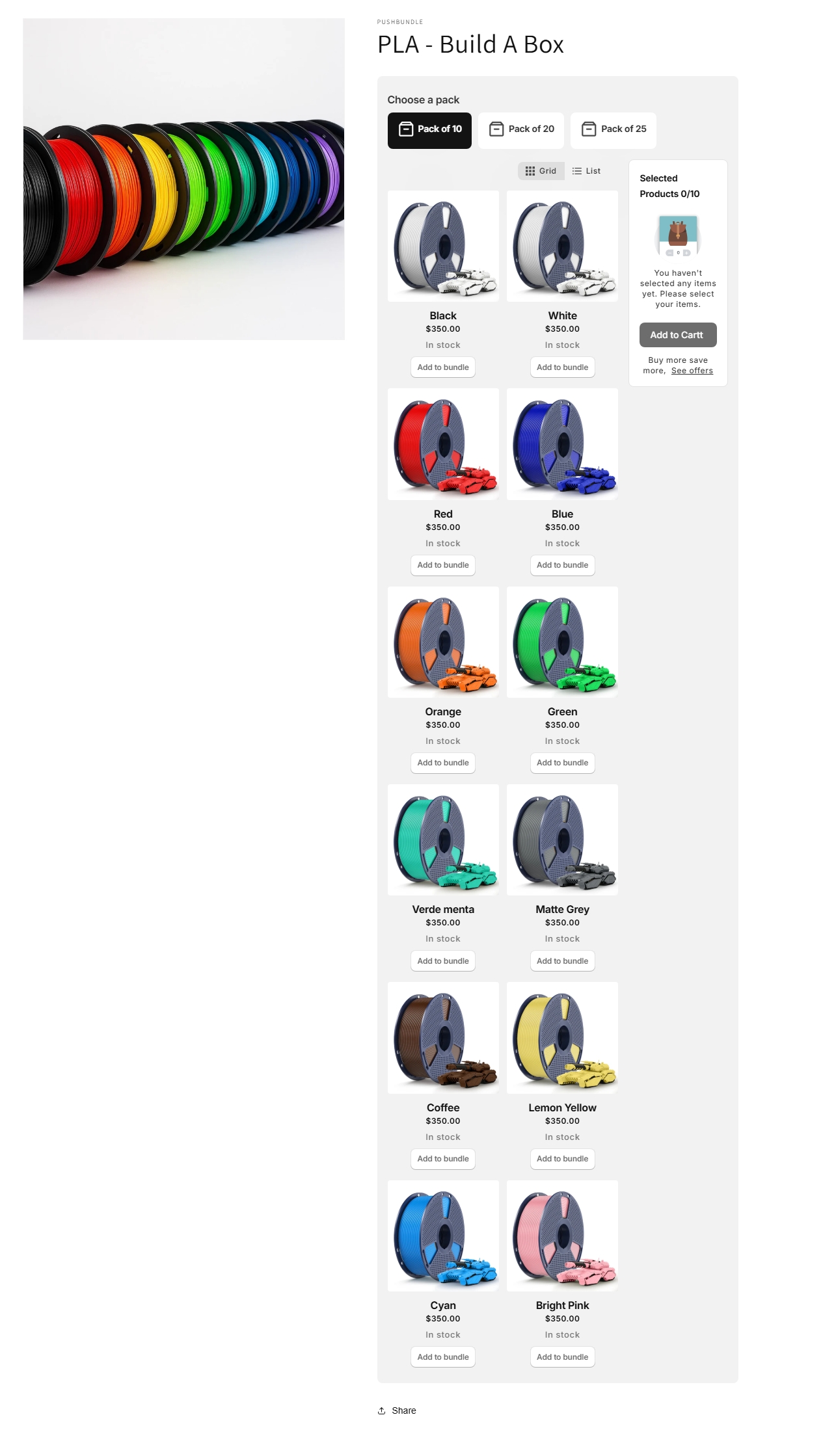
Dado que Shopify no ofrece este tipo de paquetes por sí mismo, necesitas un tercero. Aplicación de paquetes combinables. Hay muchas aplicaciones disponibles en la App Store. Necesitas comprender tus necesidades para encontrar la adecuada. Las mejores aplicaciones de paquetes combinables de Shopify para ti.
Paso#5 Agrega el widget de paquete a tu tienda.
La mayoría de las aplicaciones lo hacen mediante un bloque que se coloca en la página del producto o en una página dedicada al paquete. No se requiere programación en la mayoría de los temas modernos de Shopify.
Paso#6 Pruébalo antes de publicarlo.
Prueba tú mismo la experiencia de compra. Comprueba que el botón "Añadir al carrito" permanezca bloqueado hasta que se complete el paquete, que el descuento se aplique correctamente al finalizar la compra y que el inventario se actualice correctamente para cada artículo seleccionado.
Combina y crea en Shopify: Preguntas frecuentes
¿Shopify admite de forma nativa la combinación de paquetes personalizados?
No. La función de paquetes integrada de Shopify admite paquetes fijos y multipacks, pero no permite que los clientes seleccionen su propia combinación de un catálogo de productos. Necesitas una aplicación de terceros para añadir esa funcionalidad.
¿Puedo ofrecer un descuento cuando los clientes completen un paquete combinado?
Sí. La mayoría de las aplicaciones para combinar productos admiten descuentos porcentuales, precios fijos para paquetes y precios escalonados que aumentan el descuento a medida que el cliente añade más artículos. El descuento suele aplicarse automáticamente al finalizar la compra, una vez que el paquete está completo.
¿Funcionan los paquetes combinables para tiendas con un catálogo de productos reducido?
Depende de la variedad que exista en ese catálogo. Si tienes 10 productos que se diferencian significativamente entre sí, combinarlos puede funcionar bien. Si tienes 5 productos bastante similares, es posible que no haya suficiente variedad como para que valga la pena implementar ese formato.
¿Cómo puedo evitar que los clientes finalicen su compra con un paquete incompleto?
La mayoría de las aplicaciones de combinación de productos gestionan esto manteniendo el botón "Añadir al carrito" desactivado hasta que el comprador haya alcanzado la cantidad requerida. Algunas también añaden un paso de validación en el carrito o al finalizar la compra. Es recomendable realizar pruebas antes de la publicación, ya que el comportamiento puede variar entre aplicaciones y temas.
Para finalizar
La función de combinar productos en Shopify funciona porque resuelve un problema real en la experiencia de compra de paquetes. No todos buscan la misma combinación, y obligarlos a elegir una suele ser la razón por la que un paquete no se convierte en venta. Cuando los compradores pueden elegir, el paquete deja de parecer una oferta prefabricada y comienza a sentirse como algo que ellos mismos crearon.
Dicho esto, no es el formato adecuado para todas las tiendas. Si tus clientes ya tienen preferencias marcadas dentro de tu línea de productos y las compras de varios artículos les resultan naturales, vale la pena probarlo. Si tu catálogo es pequeño o tus clientes esperan que tú te encargues de la selección, un paquete fijo podría ser más conveniente.
La configuración en sí no es complicada. Define el grupo, establece las reglas, elige una estructura de precios y deja que los compradores hagan el resto.

Blogs destacados publicaciones

30 de junio de 2026
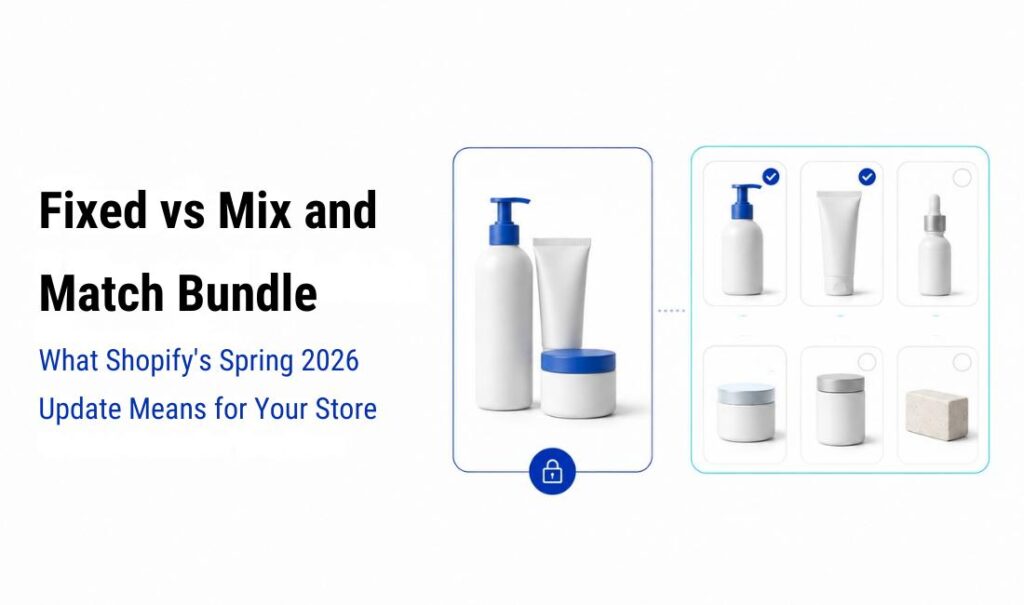
PushBundle vs Bundler: ¿Qué aplicación para agrupar productos en Shopify merece la pena en 2026?
29 de junio de 2026
Las mejores aplicaciones de venta cruzada en Shopify en 2026 para aumentar el valor promedio del pedido sin necesidad de más anuncios.

18 de junio de 2026
 Español
  English
  日本語
日本語  Français
  Deutsch
  简体中文
简体中文  Italiano