Your Shopify store has a traffic problem. Or at least, that’s what you think. You spend money on ads. Traffic goes up. But revenue barely moves. The real problem isn’t traffic. It’s average order value. But choosing the right bundle app means the difference between a 20% AOV jump and a 0% jump. And this is why you need to learn how to increase Shopify AOV with bundle apps.
According to McKinsey research, strategic product bundling increases revenue by 20% and life profits by up to 30%. Most stores see AOV increase 20-30% within 60 days of launching their first bundle. The toolkit to make this happen exists. Don’t believe us? Keep reading to find out about the best 5 apps to boost your AOV.
- Bundle apps help Shopify merchants increase AOV without needing more traffic or developers quickly.
- PushBundle supports mix and match bundles, MOQ rules, variants, and volume pricing for merchants.
- Top bundle apps differ by setup speed, inventory sync, analytics, and B2B features overall.
- The right bundle strategy pairs products naturally, tests discounts, and tracks AOV impact clearly.
- Avoid rigid bundles, weak discounts, poor visibility, and inventory mistakes before scaling campaigns widely.
Table of Contents
How Product Bundles Increase Shopify AOV with Bundle Apps
Bundles work because they solve a customer problem and a store problem simultaneously. Customers don’t know what products go together. Bundles show them. Stores want customers to buy more. Bundles make it easy.
The psychology is subtle. When a customer sees three products bundled at a discount, they perceive value.
“This bundle costs $75 for three items. Buying separately would be $110. I’m saving $35.”
The customer feels smart. The store wins because $75 is still $15 more than if they’d bought one item separately. This is why you can increase Shopify AOV with bundle apps so effectively. Apps make everything faster and more efficient. It also minimizes errors.
You don’t need more traffic. You need smarter bundling. And smart bundling needs bundle apps.
What Makes a Great Shopify Bundle App
Before comparing the apps, here’s what separates good bundle apps from great ones.
- No-code setup matters. If setup takes three hours, you won’t launch bundles. Good apps let you create a bundle in five minutes. Setup delay is the #1 reason stores don’t bundle.
- Variant control is crucial for apparel, beauty, and fashion brands. Can you bundle a shirt in size small with pants in size large? Many apps say yes but don’t actually support it well. Bad variant control means limited bundle combinations.
- Real-time inventory sync prevents overselling. You create a bundle with 10 units of product A and 10 units of product B. Customer buys one bundle. You want inventory to decrease for both items. If inventory doesn’t sync, you oversell and disappoint customers.
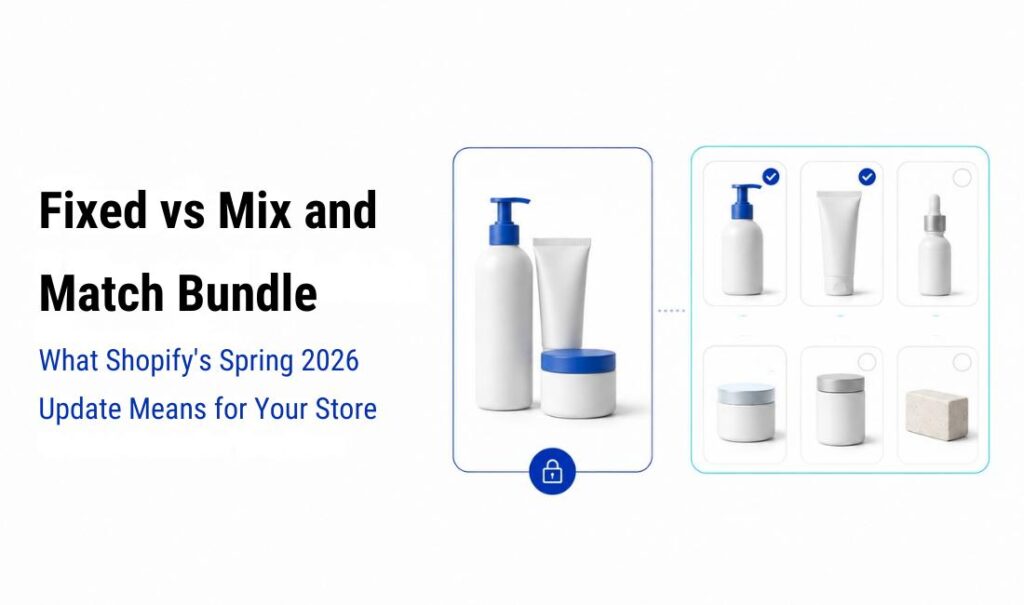
- Mix-and-match functionality lets customers customize bundles instead of buying fixed packs. “Build your own foundation set: choose any three products from our collection.” This increases conversion because customers choose what they want instead of accepting a pre-made bundle.
- B2B features are essential for wholesale, minimum order quantities, and tiered pricing. Retail bundle apps don’t handle complex wholesale scenarios well.
- Analytics show which bundles convert and which waste shelf space. Without data, you’re guessing.
How We Selected These 5 Shopify Bundle Apps
We selected these five apps based on how well they support real Shopify bundle use cases. The goal was not to list apps only by review count or popularity. We looked at how each app helps merchants create bundles, manage products, improve the buying experience, and increase Shopify AOV with bundle apps.
Here are the main criteria we used:
- Rating and reviews: All 5 apps are at least 4.9 or higher with mostly positive merchant reviews.
- No-code setup: Merchants should be able to create and launch bundles without developer support.
- Bundle flexibility: The app should support useful bundle types such as fixed bundles, mix-and-match bundles, volume bundles, or upsell-style offers.
- Variant and inventory control: The app should work well for products with sizes, colors, flavors, shades, or other variants while keeping inventory accurate.
- AOV-focused discount options: The app should support offers like quantity breaks, BOGO, tiered pricing, or dynamic bundle pricing.
- B2B and wholesale fit: We considered whether the app can support MOQ, volume pricing, bulk ordering, or larger wholesale purchases.
- Clear use-case fit: Each app was selected because it efficiently and effectively serves merchants’ needs, from fast retail bundles to flexible B2B bundle building.
Comparison Table: Top 5 Shopify Bundle Apps Side-by-Side
| Feature | Vitals | Kaching Bundles | Bundler | Simple Bundles | Selleasy | PushBundle |
| Rating | 4.9/5 (2,500+ five-star reviews) | 5.0/5 | 4.9/5 | 4.9/5 | 4.9/5 | 4.9/5 |
| Setup Time | Minutes. One install activates all 40+ conversion apps | 10-15 min | 15-20 min | 10 min | 10 min | 5-8 min |
| Best For | Merchants who want 40+ conversion apps in one subscription | Fast retail bundles | General bundle campaigns | Variants & apparel | Post-purchase upsells | All-in-one flexibility |
| Fixed Bundles | Yes | Yes | Yes | Yes | Yes | Yes |
| Mix & Match | Yes | No | Yes | Limited | Recommended combos | Yes |
| Variant Control | Yes | Basic | Good | Excellent | Basic | Excellent |
| MOQ Support | Yes | No | No | No | No | Yes |
| Inventory Sync | Yes, through Shopify inventory | Real-time | Real-time | Real-time | Real-time | Real-time |
| Analytics | Yes, plus Visitor Replays for session-level behavior | Basic | Advanced | Basic | AI-powered | Detailed |
| BOGO Offers | Yes, via Buy X Get Y | Yes | Yes | Yes | Yes | Yes |
| Quantity Breaks | Yes, via Volume Discounts | Yes | Yes | Yes | Yes | Yes |
| Dynamic Pricing | Yes, through Volume Discounts and tiered rules | Limited | Yes | No | No | Yes |
| B2B Features | Limited | No | Limited | No | No | Yes |
| Post-Purchase Upsells | Yes | No | No | No | Yes | Limited |
| Custom Landing Pages | Yes | No | Yes | No | No | Yes |
| Free Plan | No. 7-day free trial, then $29.99/month | No | Yes | Yes | Yes | Yes |
| Best AOV Increase | 15-20% | 15-25% | 18-28% | 15-22% | 12-18% | 22-35% |
Top 5 Shopify Bundle Apps: Detailed Comparison
App #1: PushBundle – Build a Box App
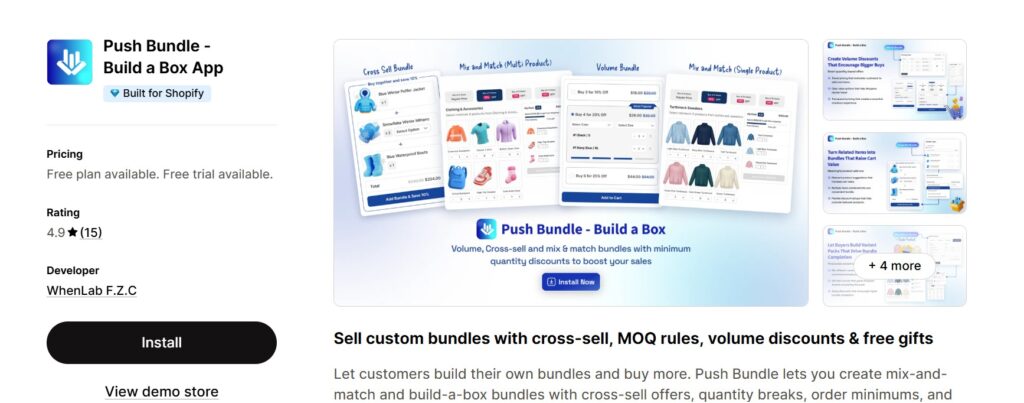
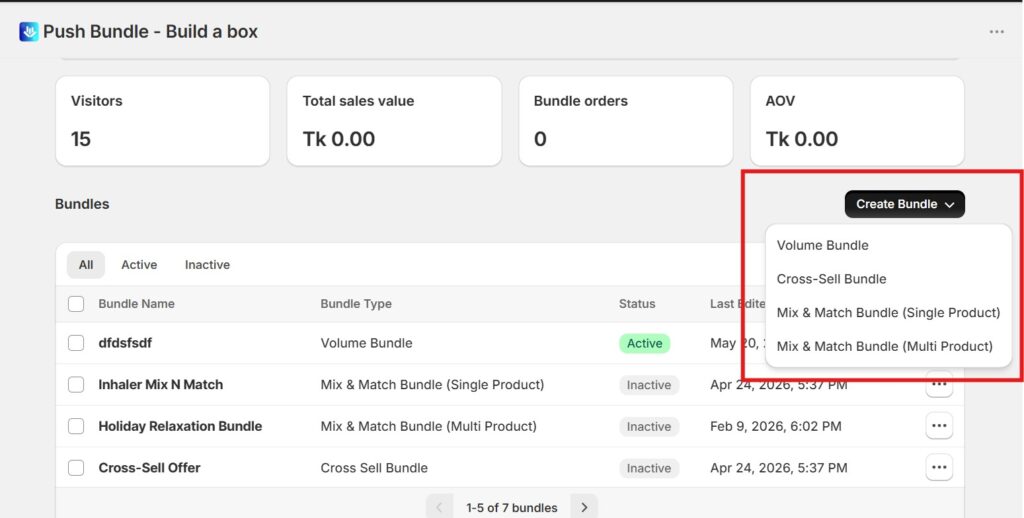
PushBundle is built for merchants who need more than simple fixed bundles. This wholesale bundle app supports mix and match bundles, build a box offers, volume bundles, cross-sell bundles, and flexible product packs. That makes it useful for beauty, food, apparel, gifting, and wholesale stores.PushBundle also supports MOQ and volume discount combo for bulk buyers.
Real-World Example:
An online bakery store used PushBundle’s Mix and Match bundle feature to let customers build their own boxes from cakes, cookies, and pastries. Instead of forcing fixed packs, Coho gave shoppers more choice while keeping bundle requirements clear.
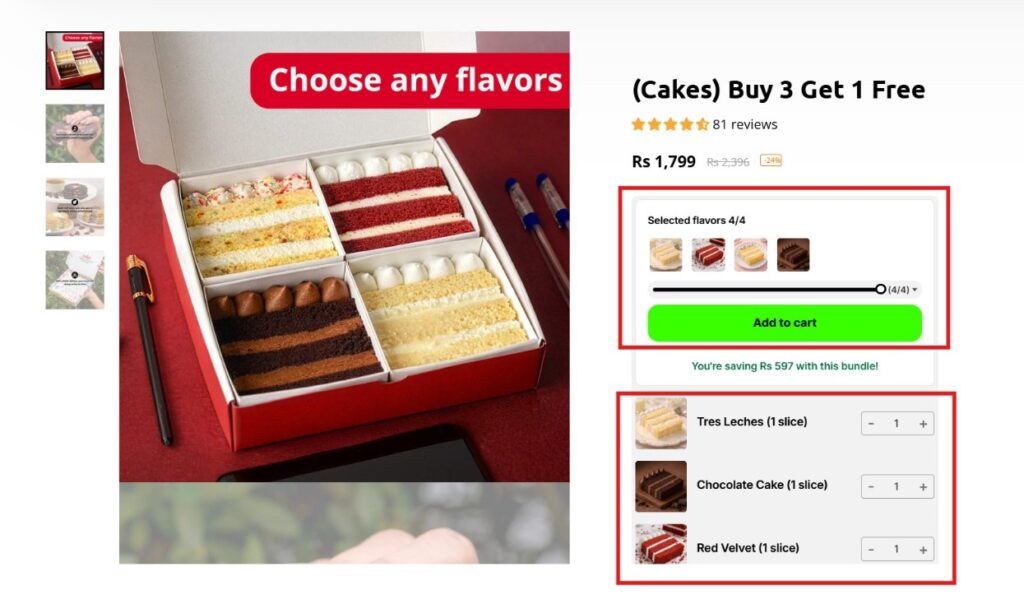
The result was Rs 1,405,634 in bundle sales in less than a month, with 794 bundle orders, a 9.2% conversion rate, and Rs 1,770 average order value.
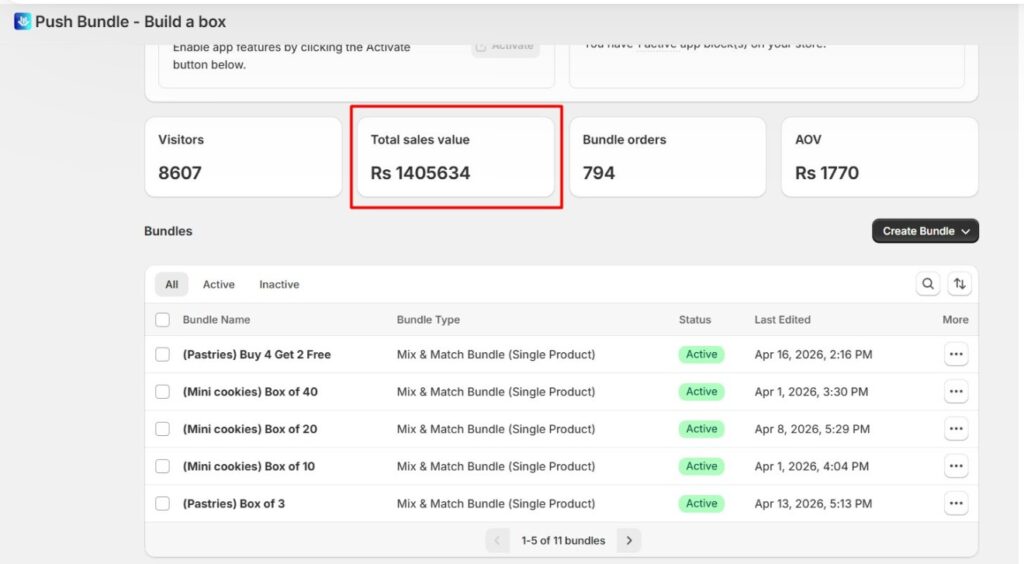
This makes the buying process smoother for both customers and store teams.
Pros
- Mix and match bundles where customers can choose products and variants inside one guided bundle.
- Build a box and multi-product bundle options for flexible packs, gift boxes, and routine-based selling.
- Volume bundles, quantity breaks, order minimums, and flexible pricing rules for larger carts.
- Variant limits and min or max quantity rules for stores selling size, flavor, shade, scent, or pack-based products.
- Inventory sync, single product cart display, custom layouts, and support for DTC and B2B wholesale stores.
Cons
- While PushBundle is excellent for creating flexible bundles, all its advanced features are only available on the paid version. Its free version only offers Volume bundle discounts & pricing tiers.
App Details
- Rating: 4.9 out of 5 stars from 15 reviews.
- Developer: WhenLab F.Z.C.
- Pricing: Free Starter plan available. Growth plan starts at $14 per month, with a 14-day free trial.
- Best for: B2B, MOQ, variants, wholesale, and mix and match bundles.
AOV impact: Typically 22 to 35% for stores using advanced bundling with MOQ, volume pricing, and flexible product selection.
App #2: Vitals
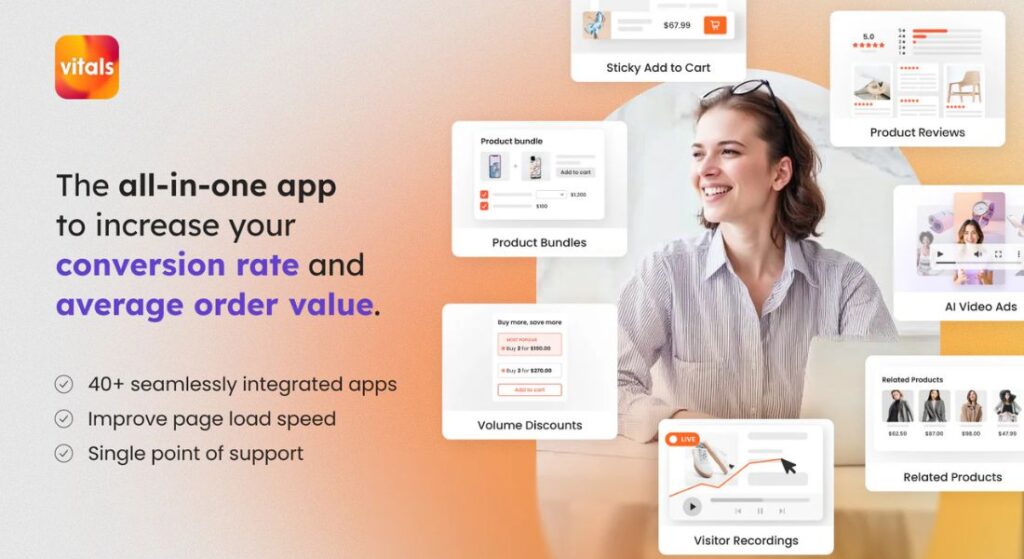
Vitals is the best Shopify marketing app that includes 40+ conversion apps in a single install, including Product Bundles, Frequently Bought Together, Volume Discounts, Buy X Get Y, reviews, upsells, popups, and trust badges. Instead of managing multiple apps, you can build bundle offers from the same dashboard that powers the rest of your conversion strategy. This makes it easy to combine bundles with social proof, cart offers, and upsells to maximize average order value.
Pros
- Product Bundles, Frequently Bought Together, Volume Discounts, Buy X Get Y, and cart upsells are all included in one app, helping you increase AOV without paying for multiple subscriptions.
- A single lightweight script replaces multiple standalone apps, reducing page bloat and helping your store stay fast.
- Reviews, trust badges, and recent sales notifications reinforce your bundle offers, giving shoppers more confidence to purchase additional products.
- The Cart Drawer surfaces bundle and upsell offers when shoppers are ready to check out, creating another opportunity to increase order value.
- 24/7 human support covers every feature in the suite, so you only need one support team regardless of which feature you’re using.
Cons
- Vitals is priced as a complete suite, so merchants looking for only a bundle app may pay for features they don’t immediately need.
- Merchants with advanced B2B or wholesale bundle requirements should verify that the Product Bundles feature supports their specific workflow before switching.
App Details
- Rating: 4.9/5 from 2,785+ five-star reviews
- Developer: Vitals
- Pricing: $29.99/month for the full suite of 40+ conversion apps. Email contacts are priced separately.
- Best for: Shopify merchants who want product bundles, reviews, upsells, and other conversion features in a single app instead of managing multiple subscriptions.
AOV impact: Typically 15-20% with different bundle offers.
App #3: Bundler – Product Bundles App
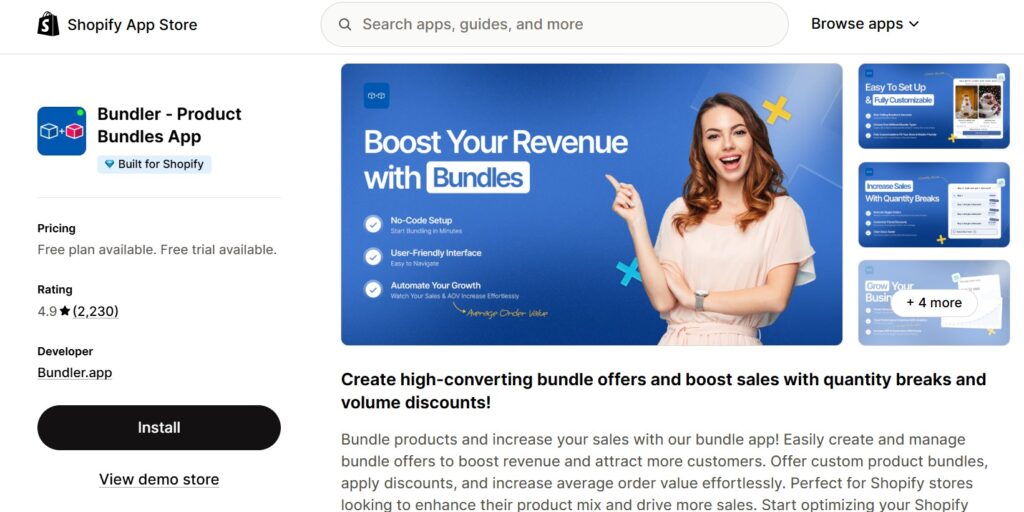
Bundler is a practical option for merchants running general bundle campaigns. It can support fixed bundles, mix and match offers, volume discounts, and landing page style campaigns. That gives merchants several ways to test product bundling.
Pros
- Classic bundles, mix and match bundles, quantity breaks, and tiered discount options.
- Percentage discounts, fixed amount discounts, and fixed price bundle offers.
- Bundle landing pages, shortcodes, and cross-sell offers for campaign-based selling.
- Performance reports for reviewing total revenue, AOV, conversions, sales, and applied discounts.
Cons
- The setup has more moving parts than simpler retail bundle widgets. That can be helpful for merchants who want options, but it may require more time during setup. It works best when the store needs general campaign flexibility, not highly specific B2B bundle control.
App Details
- Rating: 4.9 out of 5 stars from 2,200+ reviews.
- Developer: Bundler.app.
- Pricing: Free plan available. Premium starts at $9.99 per month, and Executive starts at $19.99 per month.
- Best for: General bundle campaigns and flexible promotional offers.
AOV impact: Typically 18 to 28% with optimized promotional bundle strategies.
App #4: Simple Bundles and Kits
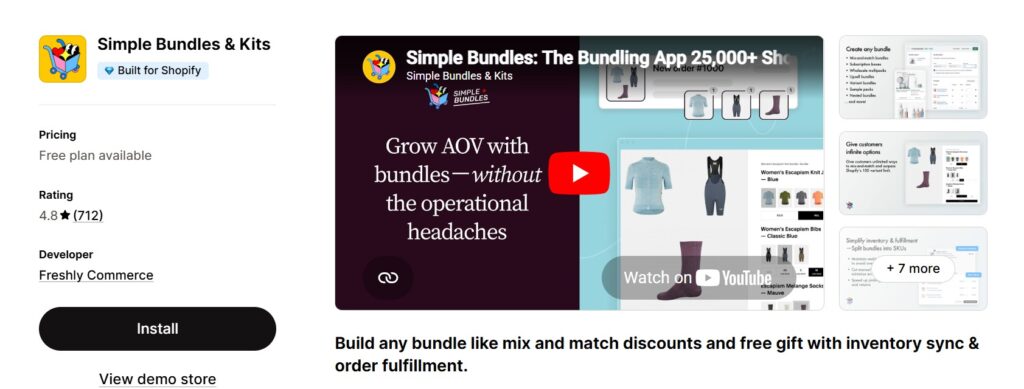
Simple Bundles focuses on kits, bundles, and component inventory. It is helpful when merchants need a cleaner way to manage products that are sold together. This can matter for apparel sets, food kits, gift boxes, and product packs.
Pros
- Fixed bundles, multipacks, mix and match bundles, variant bundles, and gift boxes.
- Component inventory tracking and automatic bundle SKU breakdown for operational clarity.
- Bundle sales analytics and AI bundle suggestions from order history on the free plan.
- POS support, Shopify Flow support, custom bundle order metafields, and advanced order processing on paid plans.
Cons
- Simple Bundles may not be the main fit for advanced B2B bundle logic or guided wholesale buying. It works better when the main need is structured kits and reliable component tracking. Merchants should compare the storefront experience before choosing it for flexible bundle builders.
App Details
- Rating: 4.8 out of 5 stars from 700+ reviews.
- Developer: Freshly Commerce.
- Pricing: Free plan available. Paid plans start at $14 per month, then $39 and $149 for higher tiers.
- Best for: Apparel, food, kits, and variant inventory workflows.
AOV impact: Typically 15 to 22% for product categories with kits, variants, and structured bundles.
App #5: Upsell & Cross Sell – Selleasy
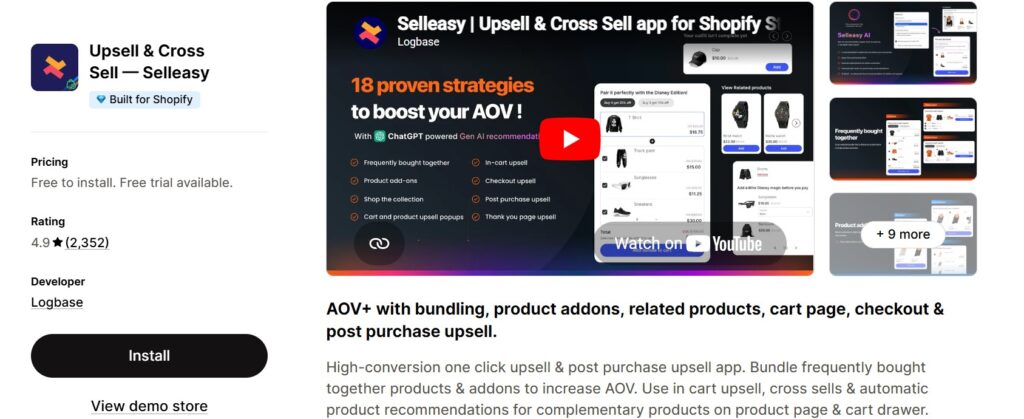
Selleasy is more of an upsell and cross-sell app than a dedicated bundle builder. It can still help merchants increase order value by recommending related products. This makes it useful when the main goal is add-on selling rather than full bundle creation.
Pros:
- Frequently bought together offers, product add-ons, and related product recommendations.
- Product page, cart drawer, checkout, thank you page, and order status page upsells.
- One click upsells, post purchase upsells, popups, and in-cart upsell funnels.
- Click through rates, conversion rates, and recommendation performance reporting.
Cons
- The tradeoff is bundle control. Selleasy is useful for recommendations, but it does not replace a flexible bundle builder when customers need to choose items inside a structured pack. Merchants should choose it when upsells are the main AOV strategy.
App Details
- Rating: 4.9 out of 5 stars from 2,300+ reviews.
- Developer: Logbase.
- Pricing: Free to install up to 50 orders per month. Paid plans start at $9 per month.
- Best for: Frequently bought together, cross-sell, and post-purchase upsells.
AOV impact: Typically 12 to 18%, sometimes higher for well timed post purchase offers.
Which Bundle App Should You Choose?
The right app depends on the store’s product type, buying flow, and bundle strategy. A simple retail store may need a quick widget. A wholesale store may need MOQ, variant rules, and volume pricing. A kit-based store may care more about inventory structure.
Here is a simple selection guide:
- Choose PushBundle for B2B, MOQ, flexible bundles, variant packs, and volume pricing.
- Choose Kaching for fast retail bundle campaigns with simple product rules.
- Choose Bundler for general promotional bundle campaigns and broader testing.
- Choose Simple Bundles for structured kits and component inventory management.
- Choose Selleasy for frequently bought together offers and post-purchase upsells.
Bundle Strategy: How to Increase Shopify AOV With Bundle Apps
Picking the app is only half the work. The bundle strategy is the other half. A bundle should be based on real customer behavior, not only product availability. Strong bundles usually connect products that customers already want together.
- Start with product pairs. If two products are often bought together, bundle them with a small discount. Track clicks, purchases, and cart value. If the bundle performs well, expand it into a larger offer.
- Then test category bundles. For example, a beauty store can let shoppers choose any three products from a routine collection. A snack store can let customers build a box from selected flavors. These bundles work because customers control the final selection.
- Finally, test volume bundles. “Buy five, save 15%” can work well for consumables, wholesale products, and low-price items. A good volume bundle increases quantity without making the customer feel forced.
The best strategy is not always the biggest discount. The best strategy is the one that makes a larger order feel useful. This is how merchants increase Shopify AOV with bundle apps while keeping the buying experience natural.
How to Increase AOV Beyond Bundling
Bundles are a strong AOV lever, but they are not the only one. Upsells, volume discounts, free shipping thresholds, and gifts can also help. The best stores often use several strategies together, but they keep the experience simple.
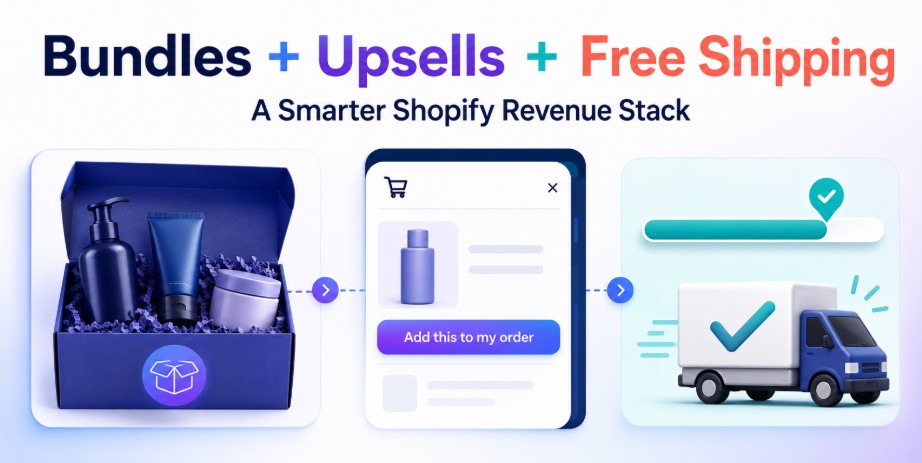
For example, “Buy a bundle and get a free gift” can feel stronger than a bundle discount alone. “Buy a bundle and get free shipping” can also increase perceived value. The offer should feel helpful, not crowded.
This is where Shopify AOV strategy bundles vs upsells becomes important.
- Bundles work better when products naturally belong together before checkout.
- Upsells work better when one small add-on supports the main purchase after selection.
A store can use both, but timing matters. If customers need a complete set, show a bundle first. If they have already chosen the main item, show a simple add-on later. That keeps the buying journey cleaner.
Common Bundle Mistakes to Avoid
Most stores that fail at bundling make the same mistakes.
- The first mistake is adding too many SKUs inside one bundle. Customers see too many choices and stop deciding. Keep the first bundle simple and focused.
- The second mistake is offering a weak discount. “Bundle three items and save 2%” rarely feels exciting. The offer should be strong enough to make the bundle feel special, while still protecting margin.
- The third mistake is making bundles too rigid. Customers often want choice, especially in apparel, beauty, food, and gifts. Flexible selection can perform better when shoppers care about size, flavor, color, or routine.
- The fourth mistake is ignoring inventory. A bundle can sell products faster, but overselling damages trust. Test inventory sync before launch, especially when the same product appears in multiple bundles.
- The fifth mistake is hiding the bundle. A bundle cannot perform if customers never see it. Feature it on product pages, collection pages, email campaigns, and seasonal landing pages.
Conclusion
Merchants can increase Shopify AOV with bundle apps when the offer makes buying easier. The right bundle should help customers choose faster, see value clearly, and build a better cart. PushBundle is a practical fit for stores that need flexible bundles, variants, B2B rules, MOQ, and volume pricing.
Start with one bundle that solves a real buying problem. Test product fit, discount depth, inventory behavior, and mobile layout. Then expand based on what customers actually use. This is how stores increase Shopify AOV with bundle apps without adding more traffic. We wish you all the best. For more such tips and tricks, check out other PushBundle blogs.
FAQ: Bundle Apps and AOV
Do bundles cannibalize sales?
Sometimes, but it depends on profit. If a bundle replaces a single-item order with a higher-value order, it may still be healthy. Track margin, AOV, and product movement before judging the result.
How much discount should bundles offer?
A 12% to 20% discount often feels meaningful without a crushing margin. The right number depends on product cost, shipping cost, and customer demand. Test different thresholds before scaling.
Should I bundle different-sized products?
Yes, if the bundle app supports variant control and inventory stays accurate. This is common in apparel, beauty, food, and gift bundles. The customer should still understand the selection clearly.
How long should bundles stay live?
Keep a new bundle live for at least 30 days to gather early data. A 90-day test is better for stronger learning. Then refresh weak bundles and expand winners.
What is the best time to launch bundles?
Launch bundles when customers already need product guidance. Seasonal campaigns, gifting periods, replenishment cycles, and B2B buying windows work well. The offer should match the shopping moment.
Can I use bundles for inventory clearance?
Yes, but do it carefully. Bundle slow-moving items with stronger products when the pairing makes sense. The goal is to clear inventory without weakening the value of bestsellers.
Do bundles work for digital products?
Yes, digital bundles can work well because fulfillment costs are low. Courses, templates, downloads, and guides can be grouped. The bundle should solve one clear customer problem.
How many bundles should I create?
Start with three to five bundles. Too many offers can confuse customers and create management problems. Create more after the first bundles show clear data.



 English
  日本語
日本語  Français
  Deutsch
  Español
  简体中文
简体中文  Italiano