
Personalized Shopping on Shopify (2026): Why Personalized Bundles Outperform Generic Offers
Personalized shopping is becoming one of the most popular trends in eCommerce. According to Amraandelma reports, 65% of eCommerce stores… Read More
Table of contents
- What Personalized Bundles Really Mean in eCommerce
- How Personalized Bundles Work Behind the Scenes
- Why Personalized Shopping Is Becoming the New Standard
- Personalized Shopping vs Generic Offers
- Personalized Bundles VS Discounts
- Why Personalized Shopping Bundles Convert Better (With Data)
- The Role of Bundle Personalization in 2026
- Personalization vs Hyper-Personalization in Bundling
- Top 5 Personalized Shopping Bundle Strategies That Scale
- Intent-Based Starter Bundles
- Customer-Built Mix-and-Match Bundles
- Behavior-Driven Volume Bundles
- Context-Aware Complementary Bundles
- Moment-Based Seasonal Bundles
- Offer Personalized Shopping with a Shopify Third-Party Bundle App
- What Makes Bundles High-Converting
- Common Mistakes Brands Make With Personalized Bundles
- How to Personalize Without Crossing Privacy Boundaries
- Measuring Success Beyond Conversions
- Preparing for Personalized Shopping in 2026
- Who Should Focus on Personalized Shopping Bundles in 2026
- Conclusion
- FAQs
- What is personalized shopping?
- What is an example of a personalized shopping experience?
- How is AI used in personalized shopping?
- What are examples of personalized shopping products?
- What are the two types of personalization in online shopping?
- How do personalized bundles differ from generic offers?
- How can Shopify merchants offer personalized shopping bundles?
Personalized shopping is becoming one of the most popular trends in eCommerce. According to Amraandelma reports, 65% of eCommerce stores report increased conversion rates from personalization. As online stores grow, customers no longer want the same offers shown to everyone. They want shopping experiences that feel relevant and thoughtful.
Instead of relying on generic discounts or fixed bundles, more brands are focusing on smarter, customer-driven experiences. One of the most effective ways to do this is through personalized bundles. And this is why we are here with our 2026 guide to help you make the most of it and offer the best personalized Shopify shopping to your customers.
Summary- Personalized shopping is now an eCommerce standard in 2026.
- Personalized bundles convert better than generic discounts.
- Customer behavior and context power effective bundle personalization.
- Five scalable bundle strategies drive long-term Shopify growth.
- Bundle apps make personalized shopping practical and easy to scale.
What Personalized Bundles Really Mean in eCommerce
Personalized bundles are not random product groups. They are smartly done combinations based on customer behavior, preferences, or buying patterns. This is what separates them from basic bundle offers.
Many stores still rely on static bundles that never change. These bundles may work for a short time, but they fail to adapt to different customer needs. Over time, this leads to lower engagement and weaker conversions.
Using personalized bundles allows brands to present products that make sense together for each buyer. This approach feels helpful instead of pushy. This is why it performs better in modern eCommerce environments. The next section will tell you why it is becoming more and more popular with the passing days.
How Personalized Bundles Work Behind the Scenes
Personalized bundles are powered by simple but powerful signals, not guesswork. Instead of showing the same bundle to everyone, stores use real customer behavior to decide which products should appear together.
Here is how personalized shopping bundles usually work:
- Browsing behavior: Pages viewed, products clicked, and time spent on specific items
- Purchase history: Past orders, repeat purchases, and product preferences
- Cart activity: Items added, quantities selected, and abandoned products
- Context signals: Device type, location, season, and shopping intent
When these signals are combined, stores can show bundles that feel relevant at that exact moment. This makes personalization feel helpful rather than intrusive, and it significantly improves conversion rates.
Why Personalized Shopping Is Becoming the New Standard
Customers today are exposed to thousands of products every day. There are too many choices and too many decisions to make. When everything looks the same, customers delay purchases or leave without buying.
Personalized shopping solves this by reducing the number of options. It helps customers find products that fit their needs, rather than forcing them to browse endlessly. When they feel understood, they are more confident in their decisions and more likely to complete a purchase.
Personalization is no longer optional. It is now a basic expectation in eCommerce. It is especially needed for brands that want to compete in 2026 and beyond. In our next two sections, we compare personalized shopping with generic offers.
Personalized Shopping vs Generic Offers
Generic offers are simple to set up, but they often lack impact. Showing the same discount to every visitor ignores the reality that customers shop differently.
Personalized shopping focuses on relevance instead of reach. It shows customers offers that match their intent, not just their presence on the site. This makes the experience feel personal rather than promotional.
When brands compare personalized bundles with generic discounts, the difference is clear. Personalized options guide customers toward better decisions, while generic offers only compete on price.
So, which one will you choose for your next offer? The following table will make your decision easier.
| Comparison Point | Personalized Shopping | Generic Offers |
| Targeting | Tailored to customer behavior, intent, or profile | Same offer shown to every visitor |
| Customer Experience | Feels personal and helpful, not sales-driven | Feels promotional and repetitive |
| Conversion Impact | Higher conversions due to a better match with intent | Lower impact as many users ignore it |
| Long-term Value | Builds loyalty and trust over time | Short-term sales with little loyalty |
| Brand Perception | Seen as thoughtful and customer-centric | Seen as discount-focused |
Personalized Bundles VS Discounts
Here, we will find out which one converts better. Personalized shopping bundles or discounts?
Discounts reduce price, but they do not reduce uncertainty. Many customers still hesitate because they are unsure which products to choose.
This is where personalized product bundles become powerful. They help customers see value clearly by grouping products that solve a specific need. For example, offer personalized pet gifts for pet lovers. The store provides guidance instead of asking customers to decide everything themselves.
Over time, this approach builds trust. Customers feel supported instead of pressured, which leads to higher conversion rates and stronger repeat purchases.
Why Personalized Shopping Bundles Convert Better (With Data)
Personalized shopping is not just a trend. The data clearly shows that it drives better results than generic offers.
- 71% of customers expect personalized experiences when shopping online, according to Salesforce research.
- Personalized recommendations can drive up to 31% of eCommerce revenue, as reported by Barilliance.
- 56% of customers are more likely to return after a personalized shopping experience, based on Twilio Segment data.
These numbers explain why personalized bundles consistently outperform site-wide discounts. They reduce uncertainty, guide decision-making, and create a stronger sense of value. And the best part is that they do not rely on aggressive price cuts.
Up next, we will tell you the role of personalized bundles in the year 2026. Let us see why it is high time that you focus on personalization.
The Role of Bundle Personalization in 2026
Bundle personalization will become more advanced in the coming years. Instead of fixed rules, brands will rely more on real-time data and customer signals. Personalized shopping bundles enable stores to adjust product combinations dynamically. This ensures that customers always see bundles that match their current intent.
Personalization vs Hyper-Personalization in Bundling
Not all personalization works the same way. In 2026, the difference between personalization and hyper-personalization will matter more than ever.
| Approach | How It Works |
| Personalization | Uses predefined rules based on behavior or customer type |
| Hyper-personalization | Adapts bundles in real time using live customer signals |
Most Shopify stores start with personalization and gradually move toward hyper-personalization. Both approaches are effective, but real-time bundle personalization will become a key competitive advantage.
As competition increases, brands that invest in this level of personalization will stand out. Others will struggle to keep attention in crowded marketplaces.
The next section provides the top 5 bundling strategies that have boosted sales for many Shopify stores. Let us learn these smart strategies that can help you stand out.
Top 5 Personalized Shopping Bundle Strategies That Scale
Personalized shopping bundles scale when they adapt to who the customer is, what they want, and when they are ready to buy. These five strategies are built around intent, behavior, and context, not static discounts. That is why they consistently outperform generic offers.
Intent-Based Starter Bundles
Show different starter bundles based on the customer’s profile or intent.
What it is:
Bundles that change based on signals like first-time visits, browsing behavior, or product interest.
Why it works:
Customers see a bundle that matches their situation, not a one-size-fits-all kit.
Example:
A skincare store shows a “Beginner Routine Bundle” to first-time visitors and a “Targeted Treatment Bundle” to returning customers browsing acne-related products.
Customer-Built Mix-and-Match Bundles
Let customers personalize the bundle themselves.
What it is:
A build-your-own bundle where customers select products that match their preferences.
Why it works:
Choice creates ownership. Customers feel the bundle was made for them.
Example:
A snack brand allows customers to build a box by choosing flavors based on dietary preference, taste, or mood.
Behavior-Driven Volume Bundles
Adjust bundle offers based on buying patterns.
What it is:
Buy-more-pay-less bundles triggered by cart size, past order quantity, or repeat behavior.
Why it works:
High-intent buyers see incentives that match how they already shop.
Example:
Wholesale buyers see “Buy 10, Save More” bundles, while retail shoppers see smaller quantity bundles with lighter incentives.
Context-Aware Complementary Bundles
Bundle products based on what the customer is viewing or buying.
What it is:
Personalized bundles built around the main product the customer is currently interested in.
Why it works:
It removes guesswork and feels helpful, not promotional.
Example:
A customer viewing a coffee machine sees a bundle with compatible filters, beans, and cleaning tools tailored to that model.
Moment-Based Seasonal Bundles
Personalize bundles based on timing and shopping purpose.
What it is:
Bundles shown based on season, event, location, or gifting intent.
Why it works:
The offer feels relevant right now, not randomly timed.
Example:
Holiday gift bundles appear only for customers browsing giftable products during festive periods, while regular shoppers continue to see everyday bundles.
Offer Personalized Shopping with a Shopify Third-Party Bundle App
Now that you know the best bundling strategies, let us see how you can create personalized bundles with a mix & match bundle app.
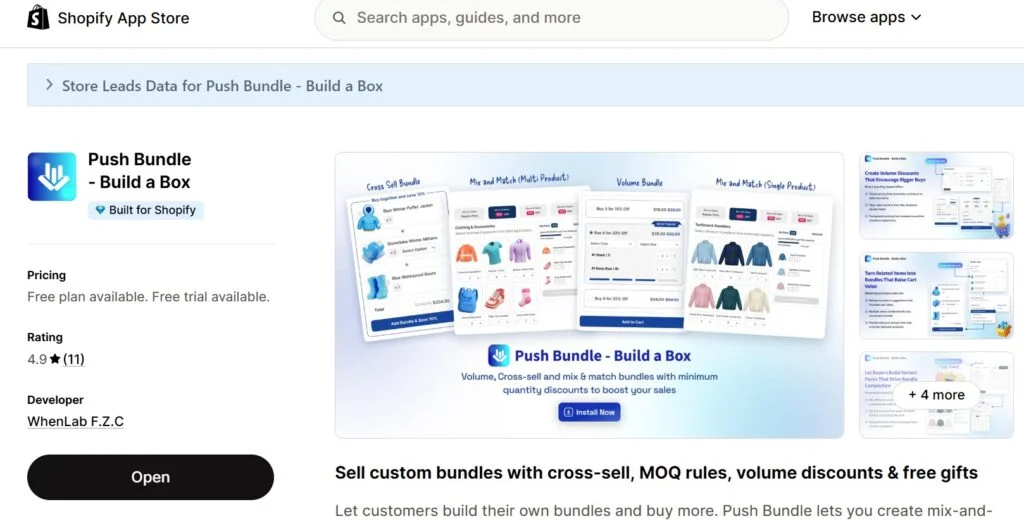
In this section, we will show you a step-by-step process to create a bundle offer in just a few minutes using PushBundle. Without a bundle app, creating custom bundles would require significantly more time and effort. And this is why you need such an app to make the bundling process smoother and faster.
1. Go to the Shopify App Store and install the app.
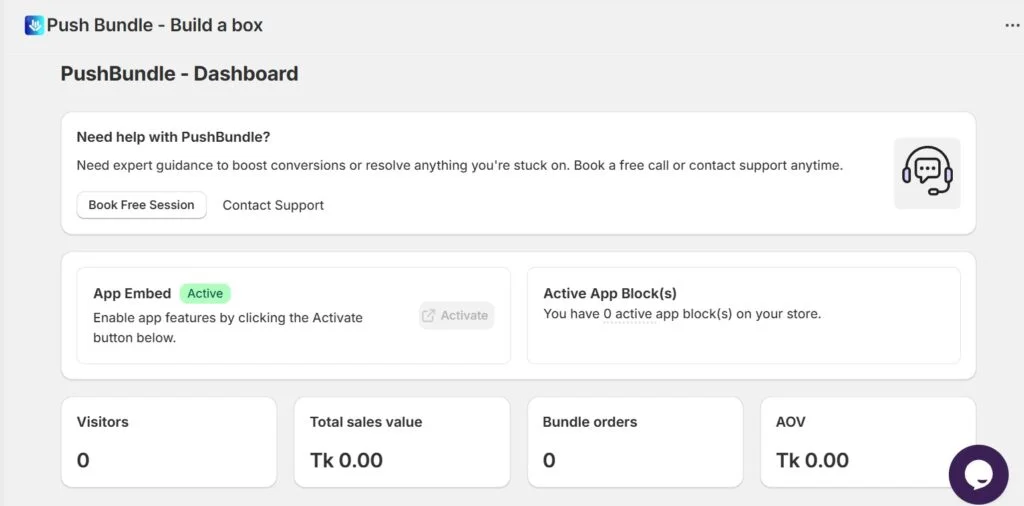
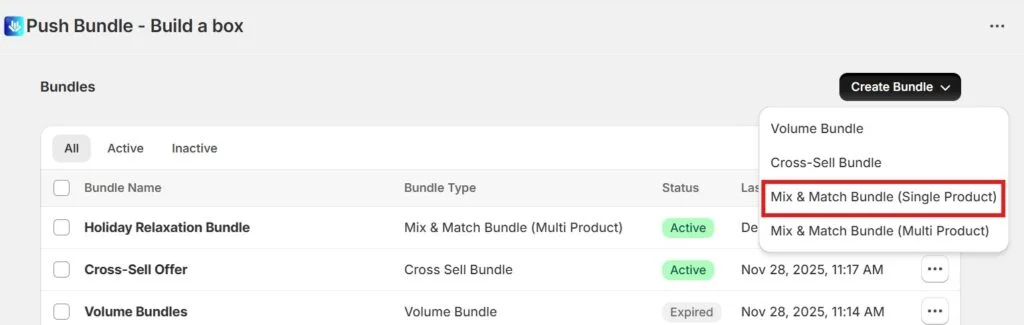
2. Go to the dashboard and select Create Bundle.
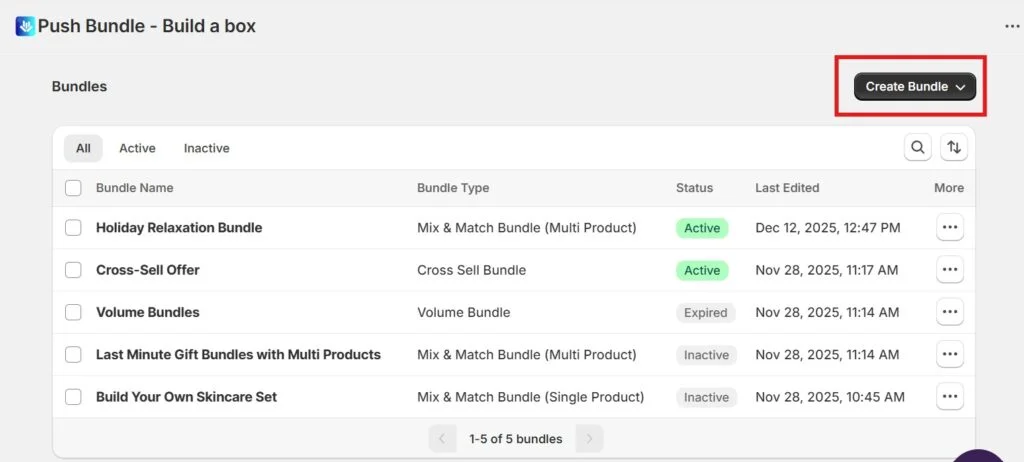
As you can see below, the app offers 4 different bundle options. In this example, we will create a Mix & Match Bundle (Multi Product).
3. From the 4 options, select Mix & Match (Single Product).
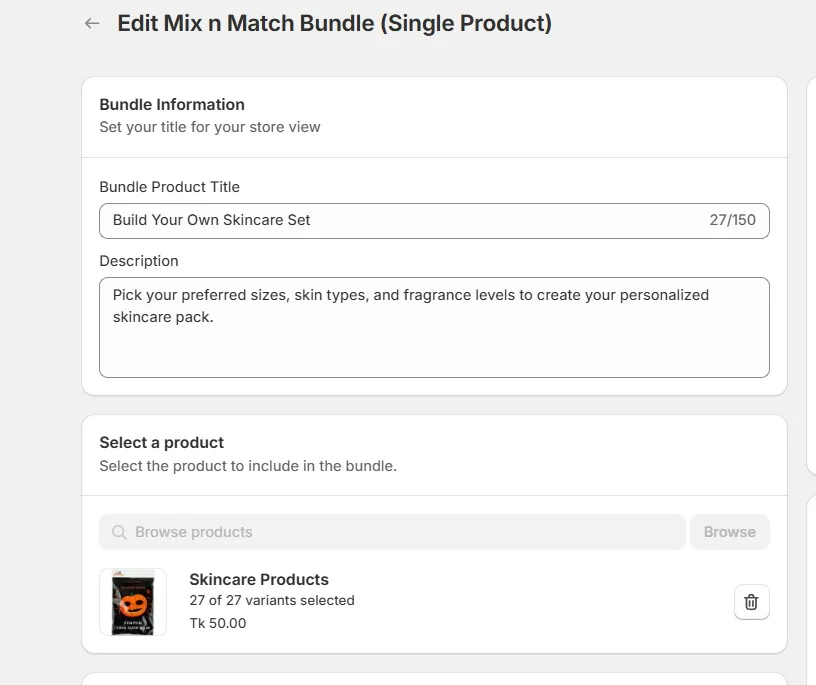
4. Fill in the basic information and select your choice of products for the Mix & Match (Single) offer. We are creating a Build-Your-Own-Skincare-Set Offer using skincare product variants.
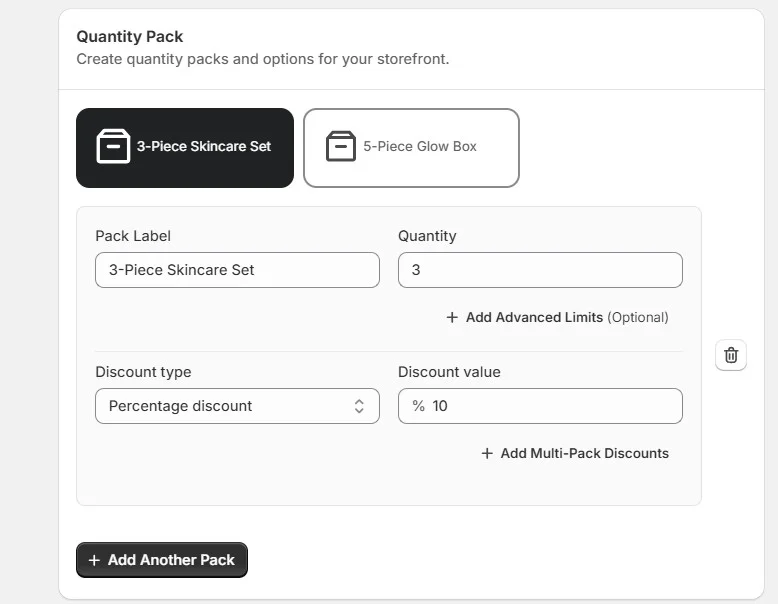
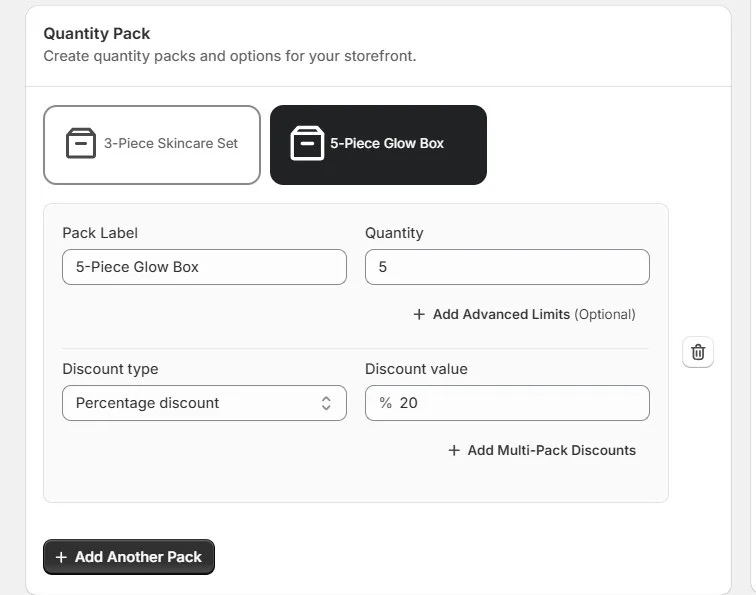
5. Scroll down to Quantity Pack and create packs with quantities and discount value of your choice.
Pack 1
Pack 2
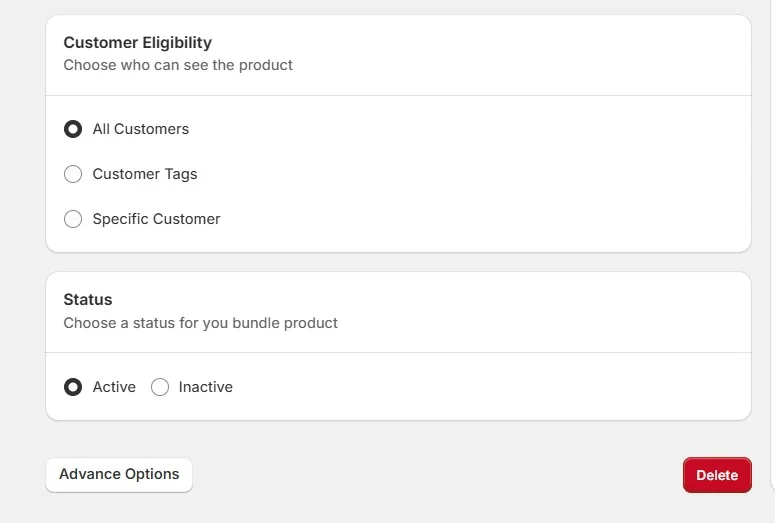
6. Finally, choose your customer group for the offer, activate the status, and save the settings.
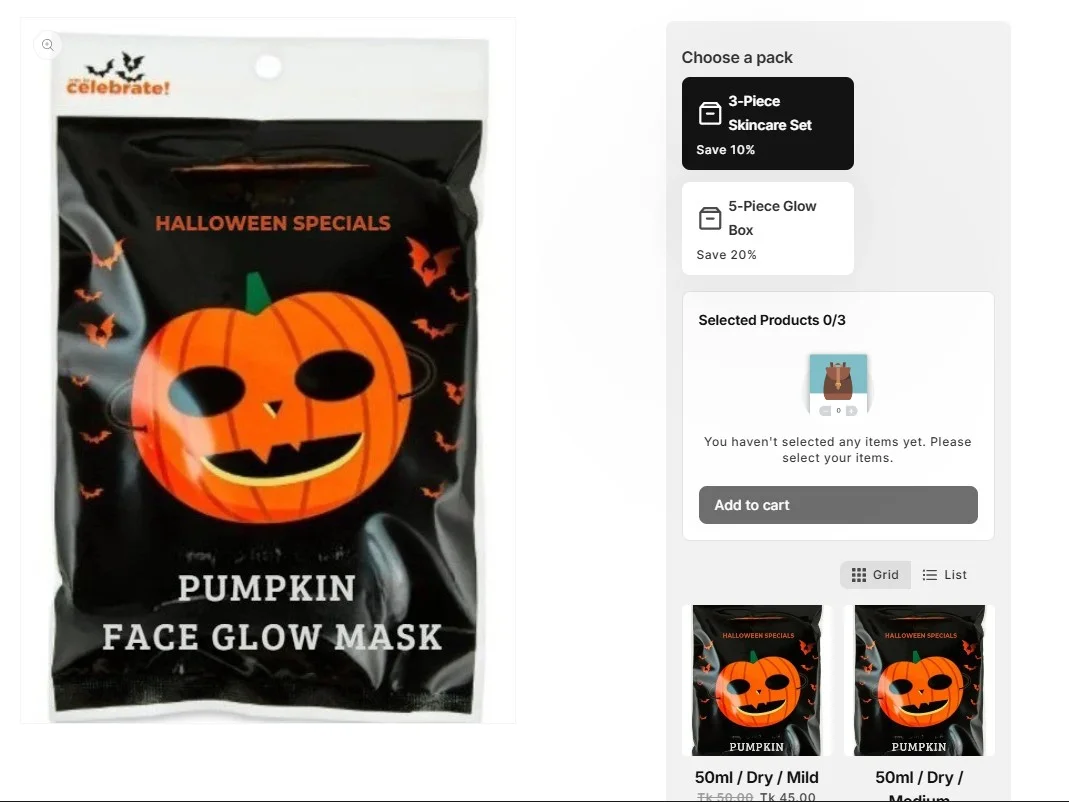
The View live shows you the product page with PushBundle. Customers can choose variants of their choice to create custom bundles, as shown.
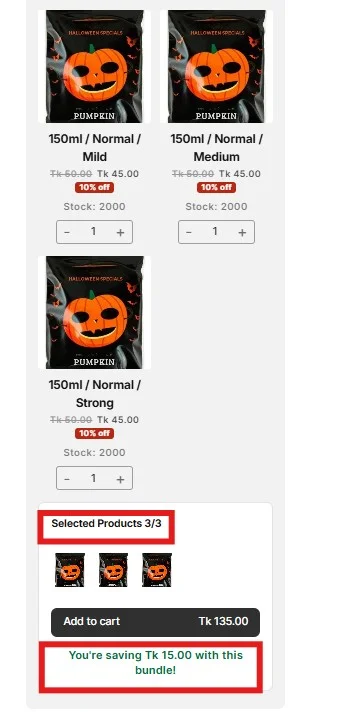
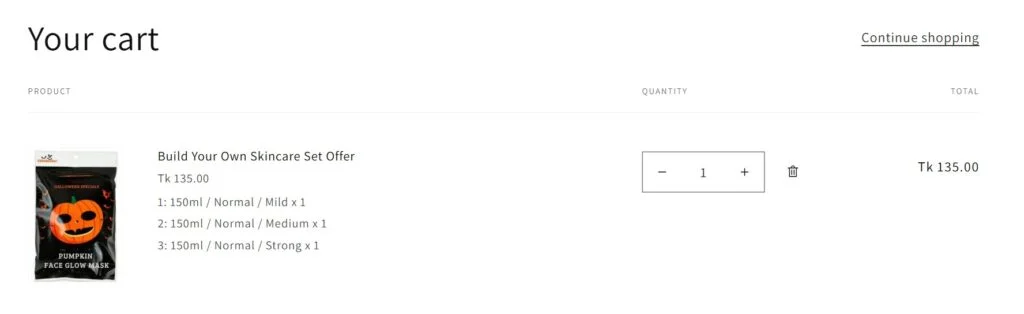
And a discount will automatically be added without you doing any complex work or coding.
In the next section, we will tell you the secret behind high-converting personalized shopping bundles. Let us find out the reasons behind them.
What Makes Bundles High-Converting
High-converting bundles share a few common traits. They are:
- Easy to understand
- Clearly valuable
- Aligned with customer intent.
- Remove friction by reducing decision fatigue.
Customers feel confident choosing a bundle because it solves a complete problem. When bundles are personalized, these benefits become even stronger, leading to better performance across key metrics.
Common Mistakes Brands Make With Personalized Bundles
There are two most common mistakes seen in personalized shopping. They are:
- Over-personalization: showing too many variations can confuse customers rather than help them.
- Ignoring context: Personalized bundles should reflect where the customer is in their journey, not just past behavior.
Avoiding these mistakes helps brands deliver personalization that feels supportive rather than overwhelming. Privacy is the next important piece of getting this right.
How to Personalize Without Crossing Privacy Boundaries
One common concern with personalized shopping is privacy. The good news is that effective personalization does not require sensitive personal data.
Here is how brands can personalize responsibly:
- Focus on behavior, not identity: Use actions like clicks and purchases instead of personal details
- Avoid over-collection: Only use data that improves the shopping experience
- Give customers control: Let customers customize bundles themselves when possible
- Be transparent: Clearly communicate how personalization improves their experience
When done correctly, personalized bundles feel supportive, not invasive. This builds trust and encourages long-term customer relationships.
Measuring Success Beyond Conversions
While conversions are important, they are not the only metric. Brands should also track engagement, repeat purchases, and customer satisfaction.
Personalized shopping impacts all of these areas by creating smoother experiences. Over time, this leads to stronger customer relationships.
Measuring these signals helps brands improve their strategy and adapt to changing customer expectations.
Next, we will talk about how to prepare for 2026 using personalized shopping. Keep reading.
Preparing for Personalized Shopping in 2026
The future of eCommerce is moving toward deeper personalization. Customers will expect brands to anticipate their needs more accurately.
Stores that rely only on discounts will struggle to keep up. Those who invest in personalized bundles will be better positioned for growth. Shopify merchants who use an advanced volume bundle app will stand out in the competition.
Preparing early allows brands to test, learn, and refine before competition becomes even stronger. So, next time you want to create offers, make sure that you follow these guidelines.
Who Should Focus on Personalized Shopping Bundles in 2026
Personalized shopping bundles are especially effective for certain types of Shopify businesses.
They work best for:
- DTC brands looking to improve conversions without deep discounts
- Subscription-based stores that want to increase retention
- Wholesale and B2B sellers offering quantity-based personalization
- Seasonal businesses that rely on timely, context-driven offers
If your store fits any of these categories, bundle personalization should be a priority in 2026.
Conclusion
Personalized shopping will define how eCommerce brands compete in 2026. Customers want experiences that feel relevant, helpful, and easy to navigate. Personalized bundles meet these expectations by guiding customers toward better decisions without relying on heavy discounts.
As eCommerce continues to evolve, brands that focus on relevance instead of reach will see stronger results. Personalized bundles are not just a trend. They are a practical strategy for building trust, increasing conversions, and creating long-term value. And you need to act upon it now to make the most of 2026 eCommerce sales. Good luck!
FAQs
What is personalized shopping?
Personalized shopping is an approach in which customers see products, bundles, or offers tailored to their behavior, preferences, or intent. Instead of showing the same offers to everyone, stores tailor the experience to make shopping more relevant and helpful.
What is an example of a personalized shopping experience?
A common example is when a customer sees recommended products or bundles based on what they viewed or purchased before. For instance, a returning customer may see a personalized bundle that matches their past buying pattern instead of a generic discount.
How is AI used in personalized shopping?
AI is used to analyze customer data such as browsing behavior, purchase history, and cart activity. Based on these signals, AI helps show relevant products, personalized offers, and dynamic bundles that match customer intent in real time.
What are examples of personalized shopping products?
Examples include customized product bundles, build-your-own kits, subscription boxes tailored to preferences, and products recommended based on browsing or purchase history. These products feel more relevant because they align with individual needs.
What are the two types of personalization in online shopping?
The two main types are rule-based personalization and behavior-based personalization. Rule-based personalization uses fixed conditions, while behavior-based personalization adapts offers based on real customer actions and intent.
How do personalized bundles differ from generic offers?
Personalized bundles are built around customer needs, behavior, or context, while generic offers show the same discount to everyone. Personalized bundles guide customers toward better choices, whereas generic offers mainly compete on price.
How can Shopify merchants offer personalized shopping bundles?
Shopify merchants can offer personalized shopping bundles by using third-party bundle apps that support mix-and-match options, volume bundle features, and customer-specific targeting. These tools make it easier to create relevant bundles without complex setup.
Reviewed for accuracy
This article was reviewed by the PushBundle Technical Support Team, who regularly helps Shopify merchants test bundle setup, product selection rules, bundle pricing, cart behavior, and checkout-related bundle issues.
About the author

Anika Anamta Mehnaz
PushBundle Contributor
This article is written by Anika Anamta Mehnaz, a Content Writer and Content Marketing Strategist specializing in Shopify, eCommerce, and SaaS. With over four years of content writing experience, she creates SEO and AI search-optimized content that helps Shopify merchants make better business decisions through practical, research-backed insights. Her work covers Shopify apps, product variants, bundles, discounts, B2B commerce, and conversion-focused strategies. Outside of work, Anika enjoys watching anime, reading John Grisham novels, and discovering new ideas in digital marketing and e-commerce. If you enjoy discussing Shopify, content marketing, or online growth, feel free to connect with her. Twitter: https://x.com/mehnaz2201 Medium: https://medium.com/@mehnaz_78932


